
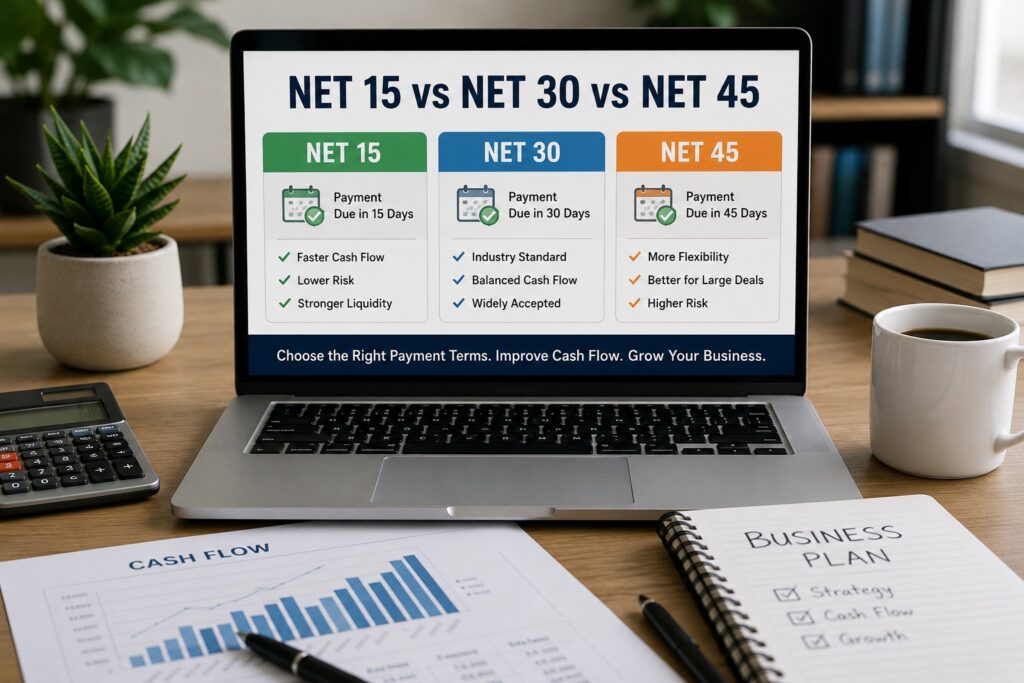
Net 15 vs Net 30 vs Net 45 Explained
If you have ever received an invoice showing “Net 15,” “Net 30,” or “Net 45,” you may have wondered what those terms actually mean. Understanding payment terms is critical for maintaining healthy business cash flow and avoiding late payment issues.
Whether you run a startup, service business, trucking company, retail store, or consulting firm, these payment timelines can directly affect your revenue, vendor relationships, and financial stability.
In This Article You’ll Learn:
- What Net 15, Net 30, and Net 45 payment terms mean
- Which payment terms are best for small businesses
- How payment terms affect business cash flow and operations
Table of Contents
- What Are Net Payment Terms?
- What Does Net 15 Mean?
- What Does Net 30 Mean?
- What Does Net 45 Mean?
- Net 15 vs Net 30 vs Net 45 Comparison
- Which Payment Terms Are Best?
- How Payment Terms Affect Cash Flow
- Tips for Small Businesses Using Invoice Terms
- Common Mistakes Businesses Make
- People Also Ask
- Related Questions
What Do Net 15, Net 30, and Net 45 Mean?
Net payment terms tell customers how many days they have to pay an invoice after receiving it.
- Net 15 = payment due within 15 days
- Net 30 = payment due within 30 days
- Net 45 = payment due within 45 days
The longer the payment term, the longer a business waits to receive money.
What Are Net Payment Terms?
Net payment terms are invoice conditions that define when payment must be made. Businesses commonly use these terms when selling products or services to other companies.
For example:
- A marketing company invoices a client
- A trucking company bills a broker
- A supplier ships inventory to a retailer
Instead of requiring immediate payment, the business allows the customer time to pay.
This practice helps build relationships and improves flexibility for clients. However, it also creates financial risk if payments arrive late.
⚠️ Important: Long payment cycles can seriously damage small business cash flow if not managed correctly.
What Does Net 15 Mean?
Net 15 Payment Terms Explained
Net 15 means the customer must pay the invoice within 15 calendar days from the invoice date.
Example:
- Invoice Date: May 1
- Payment Due: May 16
Because payment arrives faster, Net 15 terms help businesses maintain stronger cash flow.
Advantages of Net 15
- Faster payments
- Better cash flow
- Lower risk of overdue invoices
- Easier budgeting
Disadvantages of Net 15
- Some clients dislike short deadlines
- Larger companies may refuse shorter terms
- Can reduce competitiveness in B2B industries
Net 15 payment terms work best for:
- Small businesses
- Consultants
- Freelancers
- Service providers
- Businesses with tight operating budgets
What Does Net 30 Mean?
Net 30 Payment Terms Explained
Net 30 means payment is due within 30 days after the invoice date.
Example:
- Invoice Date: May 1
- Payment Due: May 31
Net 30 is one of the most common invoice payment terms in business.
Many corporations and vendors prefer Net 30 because it gives accounting departments enough time to process invoices.
Advantages of Net 30
- Industry standard
- More attractive to customers
- Easier for large clients to approve
- Encourages business relationships
Disadvantages of Net 30
- Slower cash flow
- Higher chance of late payments
- Creates financial pressure for startups
📌 Pro Tip: Many businesses build business credit by establishing vendor accounts reporting Net 30 payment history.
If you need help establishing strong business funding and vendor relationships, YMA Financial can help businesses structure properly from startup through funding readiness.
What Does Net 45 Mean?
Net 45 Payment Terms Explained
Net 45 gives customers 45 days to pay an invoice.
Example:
- Invoice Date: May 1
- Payment Due: June 15
These terms are more common with:
- Government contracts
- Large corporations
- Manufacturing industries
- Enterprise-level agreements
Advantages of Net 45
- Attractive for large clients
- Can help secure bigger contracts
- Gives customers flexibility
Disadvantages of Net 45
- Significant cash flow delays
- Higher financial risk
- Harder for small businesses to survive
- Increased borrowing needs
⚠️ Many startups struggle because they agree to long payment terms without enough working capital.
Net 15 vs Net 30 vs Net 45 Comparison
| Payment Term | Payment Due | Cash Flow Speed | Risk Level l | Best For |
|---|---|---|---|---|
| Net 15 | 15 Days | Fast | Lower | Small businesses |
| Net 30 | 30 Days | Moderate | Medium | Standard B2B |
| Net 45 | 45 Days | Slow | Higher | Enterprise contracts |
Which Payment Terms Are Best for Small Businesses?
The best payment terms depend on your business model, expenses, and cash reserves.
Net 15 Is Best If:
- You need fast cash flow
- You are a startup
- You have high monthly expenses
- You cannot wait long for payments
Net 30 Is Best If:
- You work with established companies
- You want to stay competitive
- Your cash flow is stable
Net 45 Is Best If:
- You have strong reserves
- You work with enterprise clients
- Contract size justifies the wait
How Payment Terms Affect Cash Flow
Cash flow is one of the biggest reasons businesses fail. Even profitable companies can collapse if payments arrive too slowly.
Example Scenario
A business spends:
- Payroll
- Rent
- Marketing
- Inventory
- Fuel
- Utilities
However, if invoices are not paid for 45 days, the company may struggle to cover operating expenses.
This often forces businesses to:
- Use credit cards
- Borrow money
- Delay payroll
- Reduce growth investments
📌 Strong invoice policies help businesses avoid unnecessary debt and financial stress.
Tips for Businesses Using Net Payment Terms
Send Invoices Immediately
Delays in invoicing create delays in payment.
Offer Early Payment Discounts
Example:
- “2/10 Net 30”
- Customer receives 2% discount if paid within 10 days
Use Automated Invoice Reminders
Automation improves collection rates significantly.
Screen Clients Carefully
Some businesses consistently pay late.
Build Business Credit
Strong business credit can help offset slower payment cycles.
If your company needs help with business structure, funding preparation, or startup strategy, Schedule Your Business Consultation with YMA Financial to discuss your goals.
Common Mistakes Businesses Make With Payment Terms
Agreeing to Terms Without Cash Reserves
Many startups accept Net 45 terms without enough operating capital.
Failing to Enforce Late Fees
Without enforcement, clients may delay payments repeatedly.
Not Reviewing Customer Payment History
Always evaluate payment behavior before extending terms.
Mixing Personal and Business Finances
This creates accounting and tax problems.
Why Clients Choose Masters Credit Consultants
With a 5.0-star rating across 80+ verified reviews, our clients consistently trust us to deliver real results and guidance they can rely on.
Businesses often overlook how personal and business credit impact vendor approvals and financing opportunities. Building strong credit profiles can improve access to:
- Net 30 vendor accounts
- Business loans
- Credit lines
- Equipment financing
Learn more at Masters Credit Consultants.
Recommended Supporting Pages
- YMA Financial Homepage
- YMA Financial Contact Page
- Masters Credit Consultants Homepage
- Masters Credit Consultants Blog Hub
People Also Ask
Is Net 30 Better Than Net 15?
Net 30 is more customer-friendly, but Net 15 improves business cash flow faster.
What Happens If You Miss Net 30 Payment Terms?
The invoice may become overdue and subject to late fees or collections.
Are Net 45 Terms Common?
Yes. Large corporations and government contracts frequently use Net 45 payment terms.
Can Payment Terms Affect Business Credit?
Yes. Vendor payment history may be reported to business credit bureaus.
Related Questions
- What are standard invoice payment terms?
- What does 2/10 Net 30 mean?
- How do businesses improve cash flow?
- What is invoice factoring?
- How do vendor tradelines work?
Final Thoughts
Understanding Net 15, Net 30, and Net 45 payment terms can help businesses protect cash flow, avoid financial stress, and maintain healthier operations.
Choosing the right invoice terms depends on:
- Your industry
- Client type
- Operating expenses
- Cash reserves
- Growth strategy
Businesses that manage payment timelines properly are usually better positioned for long-term success.
Schedule Your Business Consultation with YMA Financial
If you are launching or growing a business, having the right financial strategy matters.
YMA Financial helps businesses with:
- Business startup guidance
- Business planning
- Funding preparation
- Business structure setup
- Financial strategy
📞 Phone: 864-249-1439
🌐 Website: www.ymafinancial.com